In patient recruitment advertising, capturing a patient's attention is about being in the right place, at the right time, with the right message.
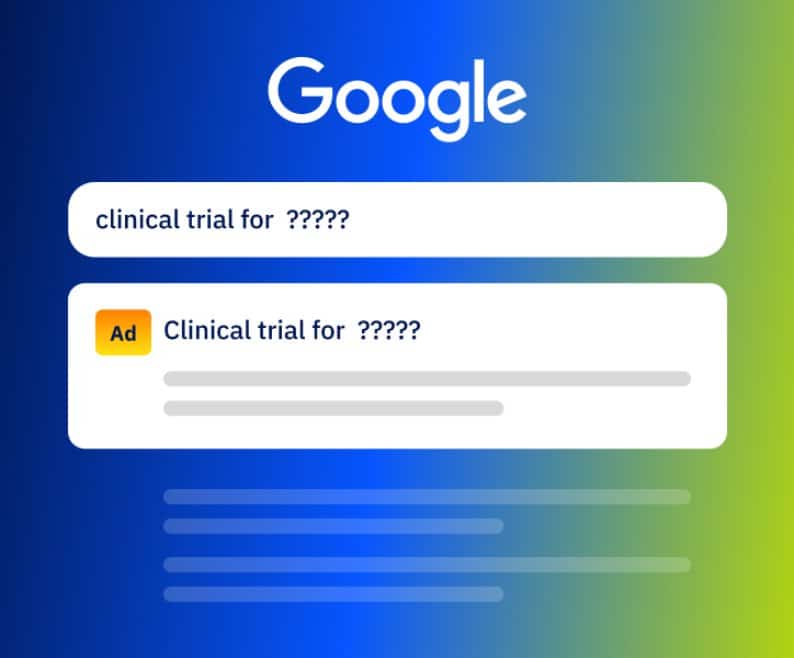
With this outcome in mind, many marketers turn to the trusted duo of Google Search and Meta. Google Search is powerful for capturing patients as they research their condition, and Meta offers reach and the ability to re-engage audiences to encourage them towards enrolment.
However, they both have limitations. Google’s reach is confined to the search bar, and Meta’s targeting can lack the precision needed to target specific patient populations.
This is where a crucial third pillar comes in: programmatic advertising.
Instead of replacing Google and Meta, the most successful patient recruitment strategies use programmatic platforms to enhance and extend them.
The Foundation: Precision Targeting at Scale
At its core, programmatic advertising offers unparalleled contextual relevance. Platforms like StackAdapt and PulsePoint provide access to millions of health-relevant webpages and other digital locations, allowing you to place your message exactly where patients are already researching their condition.
For example, imagine a patient reading an article about managing migraines on a trusted medical site. With programmatic, your ad for a new clinical trial for migraine patients can appear right alongside that article, providing a valuable option at a moment of high interest and intent.
This approach allows you to:
Target by specific conditions, demographics, or even the type of content being consumed.
Optimize ad placements in real-time based on performance data.
Drastically reduce wasted spend by focusing only on relevant digital environments.
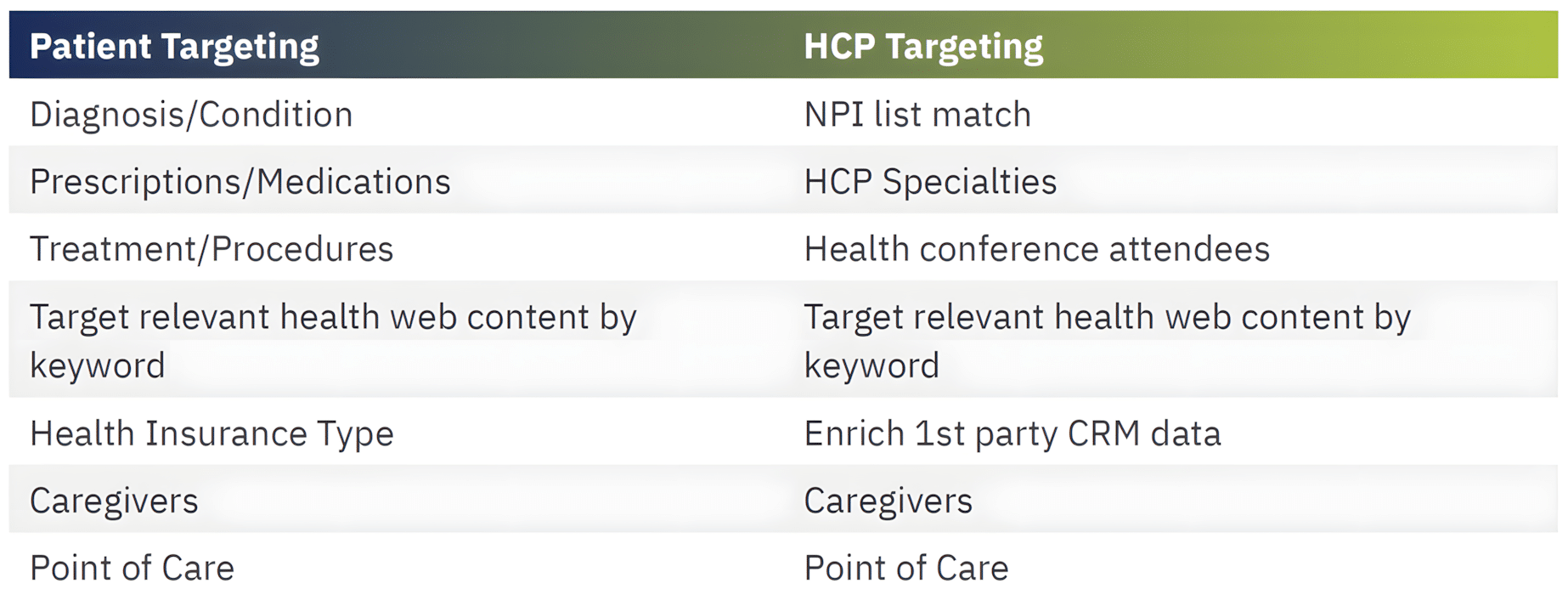
Here are some of the targeting capabilities:
Translate intricate data into powerful, accessible messages;
Manage reputational risks with precision;
Help life science companies build lasting credibility with the audiences that matter most.
Reaching Patients at the Point of Care
Programmatic advertising also excels at reaching patients in the offline world through digital out-of-home advertising (DOOH).
This means you can leverage digital ads displayed in hospital or clinic waiting rooms, bus stop displays near medical facilities, or even dynamic digital signage inside a pharmacy.
As a side note, when using DOOH, many marketers worry about wasted impressions or irrelevant placements. However, programmatic ad platforms offer precise location-based targeting to help minimize this risk, so that your ads are only shown in locations visited by your target audience (e.g. hospitals, clinics, pharmacies etc.).
Each of these tactics ensures your brand is visible precisely when and where patients are thinking about their health.
Sync Programmatic Audiences with Meta to Drive Enrolment
While targeting and reach are major advantages of programmatic advertising, its full potential is realized when paired with Meta and Google.
Rather than thinking of these channels in isolation, the most effective patient recruitment strategies treat them as interlocking parts of a unified funnel:
Step 1: Spark Awareness (Programmatic): Use programmatic display and video ads to reach a broad but highly relevant audience across a vast network of health-focused websites, apps, and even at the point of care.
Step 2: Nurture Interest (Meta): Re-engage that initial audience with focused, personalized ad campaigns on Facebook and Instagram to build trust and familiarity.
Step 3: Capture Intent (Google): Be present with Google Search ads at the exact moment a patient actively searches for solutions or clinical trials.
Step 4: Maintain Presence (Omnichannel): Use ongoing, coordinated messaging across all platforms, including your trial website, to stay top-of-mind.
This strategy works because the audiences reached through programmatic ads can be synced to Meta, allowing you to continue the conversation across platforms. Once you’ve identified a relevant audience programmatically—based on condition-specific interest, behavior, or context—you can securely re-engage that same audience on Meta to drive them further down the funnel.
This approach gives you the best of both worlds.
Programmatic excels at precision targeting, especially for specific patient populations. It allows you to reach people based on their condition-specific interest. However, it is typically geared toward single-touch engagement rather than ongoing nurturing.
Meta, by contrast, is a powerful re-engagement tool. Its strength lies in delivering multiple, personalized touch points over time. This makes it an ideal platform for building familiarity, addressing patient concerns, and ultimately driving pre-screener form submissions.
The drawback? Meta’s targeting options are relatively broad. It can be difficult to launch effective campaigns for niche or rare conditions without a strong starting audience.
By syncing your programmatic audience to Meta, you unlock a highly effective recruitment pathway: precise, condition-specific targeting to reach the right audience, followed by repeated, cost-effective re-engagement that drives enrollment. The result is a smarter, more coordinated recruitment funnel.
Smarter Targeting, Stronger Outcomes
As we’ve explored in this blog post, relying solely on Google and Meta for patient recruitment can lead to missed opportunities to reach and influence your target audiences.
Programmatic advertising fills those gaps. It finds the right patients in the right context and then empowers you to continue the conversation on the platforms they use every day.
By integrating contextual online ads, point-of-care placements, and audience syncing, you can start building a truly intelligent, responsive patient recruitment strategy.
Tired of Campaigns That Don't Drive Patient Recruitment Results?
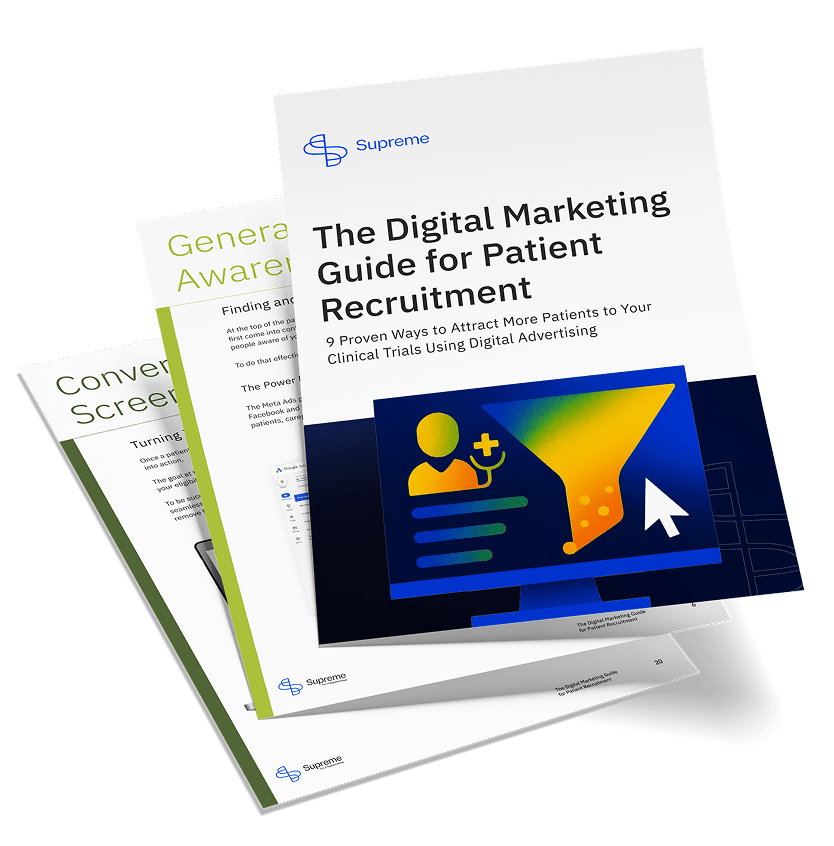
You've seen how programmatic advertising can bridge the gaps between channels. Our new eBook shows you how to build an entire digital ad strategy for patient recruitment. To stop wasting your budget on disconnected tactics, download the eBook using the button below.
Unlock More Proven Strategies to Improve Your Patient Recruitment Efforts
Download the eBook to learn how to:
Drive 68% lower cost per qualified patient
Combine Meta, Google, and programmatic ads for maximum reach
Optimize your study website and pre-screener to convert interest into action